
Where People Move, Risk Moves: Managing Exposure in Active Warehouses
Updated: May 14

Warehouses are built for movement.
Forklifts turn corners. Inventory shifts throughout the day. Foot traffic flows between workstations, aisles, and loading areas. At Eagle MH, we see how quickly these environments evolve and how important it is to understand where people and product intersect.
Because where people move, risk moves too.
Exposure Builds Gradually in Warehouses
Most safety issues do not appear overnight. They develop gradually as operations evolve. Inventory profiles change. Storage heights increase. Pallets overhang beams. Traffic patterns shift as workflows adapt. Over time, these small adjustments can create exposure in areas that once felt safe. Common zones where risk builds include:
High-traffic aisles
Walkways behind racking
Conveyor transfer points
Loading and unloading areas
Maintenance and service zones
Everything may appear normal until a near-miss or incident reveals the vulnerability.
When Movement and Storage Intersect
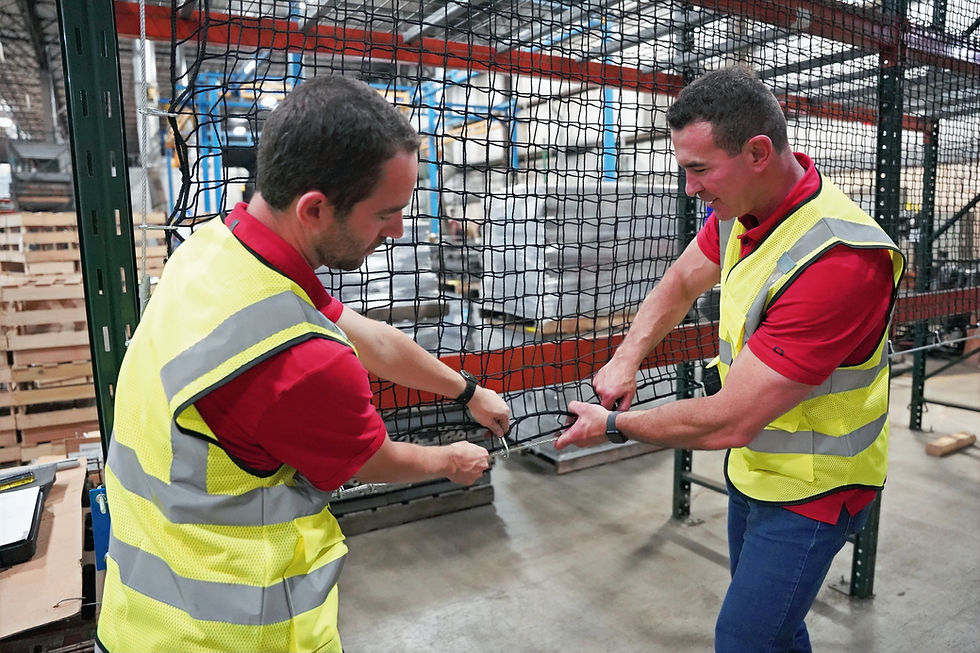
One of the most overlooked risks in warehouse environments occurs where overhead storage sits above active workspaces. When stored product is positioned above pedestrian walkways or busy work areas, even small shifts can create falling-object exposure. Pallet Rack Netting helps reduce that risk by securing stored product without disrupting operations.
Similarly, Conveyor Netting helps protect employees and equipment in areas where product moves along conveyor systems, catching stray items before they reach the floor. These solutions work best when they are part of the layout plan, not added after an incident.
High-Traffic and Service Zones Deserve Early Attention
The busiest areas of a warehouse often receive the least proactive protection. Teams focus on productivity and throughput, and safety improvements can be postponed until something forces the conversation. But these zones are where exposure grows fastest. Implementing containment systems in high-traffic areas helps:
Protect employees working near stored product
Reduce product damage from falling items
Prevent operational disruption
Solutions like Barrier Netting and Truck Netting can also help contain product during loading, staging, and transport processes. Exposure is not limited to storage aisles. Maintenance areas often introduce additional risk, especially when open service pits are present. Oil Pit Netting helps reduce fall hazards around open pits while still allowing access when needed. In some facilities, Warehouse Curtains can also help divide work zones or contain debris where netting alone may not be ideal.
Proactive Safety Keeps Operations Moving
Waiting until an incident occurs often leads to rushed solutions and unexpected downtime. Identifying exposure early allows facilities to review risk areas and implement protection before operations are disrupted. Proactive planning helps facilities:
Maintain smoother workflows
Reduce injury risk
Protect employees and stored product
Warehouse operations are always evolving. Inventory shifts, equipment moves, and traffic patterns change. Protection should evolve with them. By addressing areas where movement and storage intersect and implementing solutions like Rack Netting, Conveyor Netting, Truck Netting, Barrier Netting, Oil Pit Netting, and Warehouse Curtains, facilities can reduce exposure while maintaining productivity. The most effective safety decisions are made before they are needed.
Contact us today to discuss your facility’s specific needs and get a custom recommendation by visiting eaglemh.com or by clicking the link.


Comments