
Top 5 Warehouse Safety Trends from MODEX 2026

MODEX 2026 brought thousands of supply chain professionals to Atlanta to explore the future of material handling and warehouse operations. As proud members of MHEDA and MHI, the Eagle Material Handling team spent the week at Booth A5718 connecting with warehouse leaders, safety professionals, and facility managers around one shared priority: keeping workers safe as operations move faster than ever. From falling inventory risks to safer loading practices, companies are looking for practical ways to protect employees and inventory without slowing operations down. Here are the five biggest warehouse safety trends we noticed at MODEX 2026.
1. Preventing Falling Inventory Is a Growing Priority
One of the most common concerns warehouse operators shared was the risk of falling products from pallet racks. As facilities store more inventory vertically and move product faster than ever, dislodged items can become a serious safety hazard.
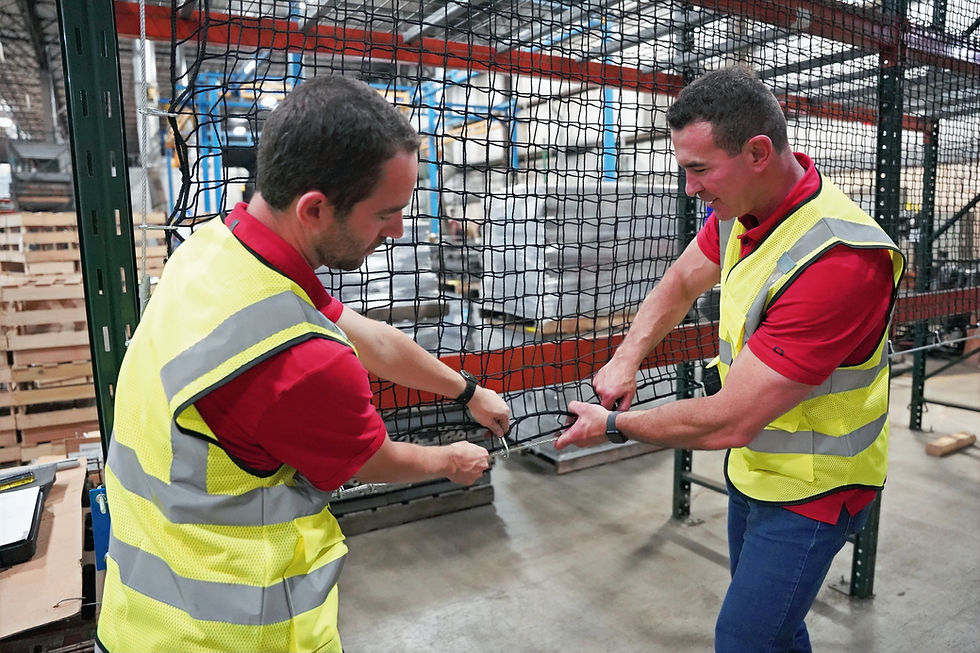
Many companies are turning to rack safety netting systems installed behind pallet racking to catch products before they fall into aisles, walkways, or work areas. These systems help protect employees, equipment, and inventory from falling-object hazards.
2. Facilities Are Looking for Flexible and Efficient Safety Solutions
Another trend we noticed was the growing demand for safety solutions that can adapt as warehouses evolve. As operations expand or layouts change, companies want systems that are easy to install, adjust, and scale with their facility.
This is especially important in fast-growing distribution centers where racking layouts and workflows frequently shift. Innovations like Eagle MH’s EZ Bracket help support this need by making rack safety netting faster and easier to install, allowing facilities to improve safety without disrupting operations.
3. Separating Work Zones for Safer Operations
In busy facilities, separating operational areas can reduce risks while improving workflow. One solution gaining attention is the use of warehouse curtains to create safer, more organized workspaces.
Warehouse curtains can divide work zones, contain debris, and shield employees from sparks, dust, or other hazards generated during certain operations. Because they are flexible and easy to install, curtains offer a practical way to improve safety and organization without making permanent facility changes.
4. Safety Solutions Are Expanding Beyond the Rack
While pallet rack areas remain a major focus, many warehouses are evaluating safety risks throughout the facility. Conveyor systems, loading areas, and service pits can all present hazards if falling objects or unsecured materials are not properly addressed.
As a result, many operations are implementing safety netting systems designed for specific applications, such as conveyor netting, truck netting, and oil pit netting. These targeted solutions help address hazards in key areas while keeping operations running efficiently.
5. Warehouse Safety Is Becoming a Business Priority
One of the most notable takeaways from MODEX was how much attention companies are placing on safety as a core operational priority. Warehouse leaders recognize that investing in safety not only protects workers but also reduces product damage, minimizes downtime, and supports more efficient operations. As warehouses continue to grow in size and complexity, building safer environments is becoming an essential part of running a successful facility.
Looking ahead
MODEX 2026 showed that warehouse safety is becoming a bigger focus across the industry. As facilities grow larger and operations move faster, protecting workers and inventory remains essential. By identifying hazard zones and implementing the right safety netting solutions, companies can create safer warehouses while maintaining the efficiency that modern supply chains demand.
Contact us today to discuss your facility’s specific needs and get a custom recommendation by visiting eaglemh.com or by clicking the link.


Comments